Car Shipping Mistakes to Avoid
Almost every expensive problem in auto transport traces back to one of two things: something about the vehicle that was not declared, or a condition report that was signed without being read. Neither costs anything to get right. Both are discovered at the curb, with a driver on a schedule and no good options left. Everything below is a version of one of those two.

Not Declaring That It Does Not Run
The most common and the most avoidable.
A car that starts and drives loads in minutes. One that does not needs a winch, and a driver who arrives expecting a runner may simply not have the equipment. That is a refused load, a wasted dispatch, and a wait for another truck.
Be precise rather than optimistic. Does it start? Does it roll? Do the brakes release? Does it steer? Those four answers decide the equipment, and “it should be fine” is not one of them. Winching typically adds around $100 to $250, which is far less than a second dispatch.
Guessing the Dimensions
The second declaration people get wrong, and it applies to more vehicles than you would think.
A lift kit, oversized tires, a roof rack, a light bar, a rooftop tent or a hitch mounted carrier all change where a vehicle can ride on a trailer. Past roughly 7 feet tall a vehicle moves off the upper deck, which changes the price. Give the measured height from the ground to the highest fixed point, not the manufacturer’s figure for a stock car.
Signing the Condition Report Without Reading It
This is the mistake that costs the most when it costs anything.
The bill of lading carries the record of every existing mark on the vehicle at pickup. A damage claim is settled by comparing delivery condition against that record, and a vague report works against you: “minor scratches, general wear” means any mark found later can be argued to have been there already.
Walk the car with the driver in daylight. Check the lower bumpers, the wheels, the rocker panels and the roof specifically, because those are what loading marks. Then photograph every panel yourself before it loads, and photograph the completed document.
Taking the Cheapest Quote
A quote is a bid to the trucking market, not a price list.
Priced below what carriers accept on your lane, nobody takes the load. It sits. Eventually you get a call saying the rate has to rise, and by then your pickup window has passed. The quote was never wrong exactly; it was never going to be accepted.
Get three. If two cluster and one sits far below, ask the outlier what happens if no carrier accepts at that number. The answer tells you which kind of company you are dealing with.
Leaving Belongings in the Car
Personal items are not covered by cargo insurance, and that surprises people every time.
Beyond the coverage, loose items shift, mark interiors and add weight. Empty the cabin and trunk completely. Take the toll transponder out, or it will register charges across several states. Remove anything adhesive from the dashboard if the car is heading somewhere hot.
Booking Too Late, or Too Rigidly
Two related errors with the same fix.
Two to three weeks ahead is the useful window on most lanes. Inside a week you pay for urgency; inside 48 hours you pay whatever it takes to pull a truck off its plan. Booking much earlier does not help, because carriers do not commit that far out.
And a single fixed date costs more than a window of several days, because a flexible load fits into a route being built now rather than requiring one to be built around it. If your dates are genuinely fixed, say so and pay for the certainty knowingly.
Assuming the Truck Can Reach Your Door
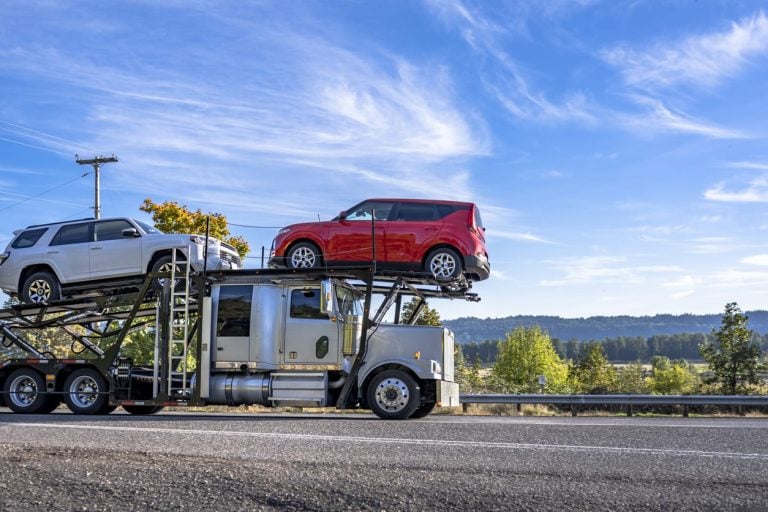
A car hauler is around 75 feet long. Narrow streets, cul de sacs, low branches, gated communities and parking structures routinely defeat one.
Discovered on the day, that is a delay or a failed delivery. Declared at booking it is nothing: a meeting point at a large lot nearby is arranged in advance, and it usually gets the car moving sooner because more drivers can take the load.
Common Questions
What is the most common mistake? Not declaring that a vehicle does not run. It changes the equipment needed and causes refused loads.
Why is the cheapest quote risky? A rate no carrier accepts means the load sits unassigned while your dates pass.
Does the condition report really matter? It is the document a damage claim is settled against. Read it, and make sure it is specific.
Can I leave things in the car? No. Personal items are not covered, they shift in transit, and they add weight.
How far ahead should I book? Two to three weeks, with a pickup window of several days rather than one fixed date.
Get a Quote
Call Ship A Car, Inc. at (866) 821-4555 and declare everything honestly, or price your lane with the instant calculator.