Door-to-Door Car Shipping: How It Actually Works
Door to door means the carrier collects your vehicle at your address and delivers it to the destination address, with no terminals and no driving on your part. It is the standard for consumer transport today and it is what almost every quote you receive already assumes. The one thing worth understanding before booking is what “door” means in practice, because a 75 foot carrier cannot always reach a front door, and knowing that in advance is the difference between a smooth handover and a surprise on the day.
What “Door” Means in Practice
The honest definition is as close to your address as the truck can legally and safely get. On a suburban street with a driveway, that is your door. In plenty of other places it is not, and no carrier can change that.
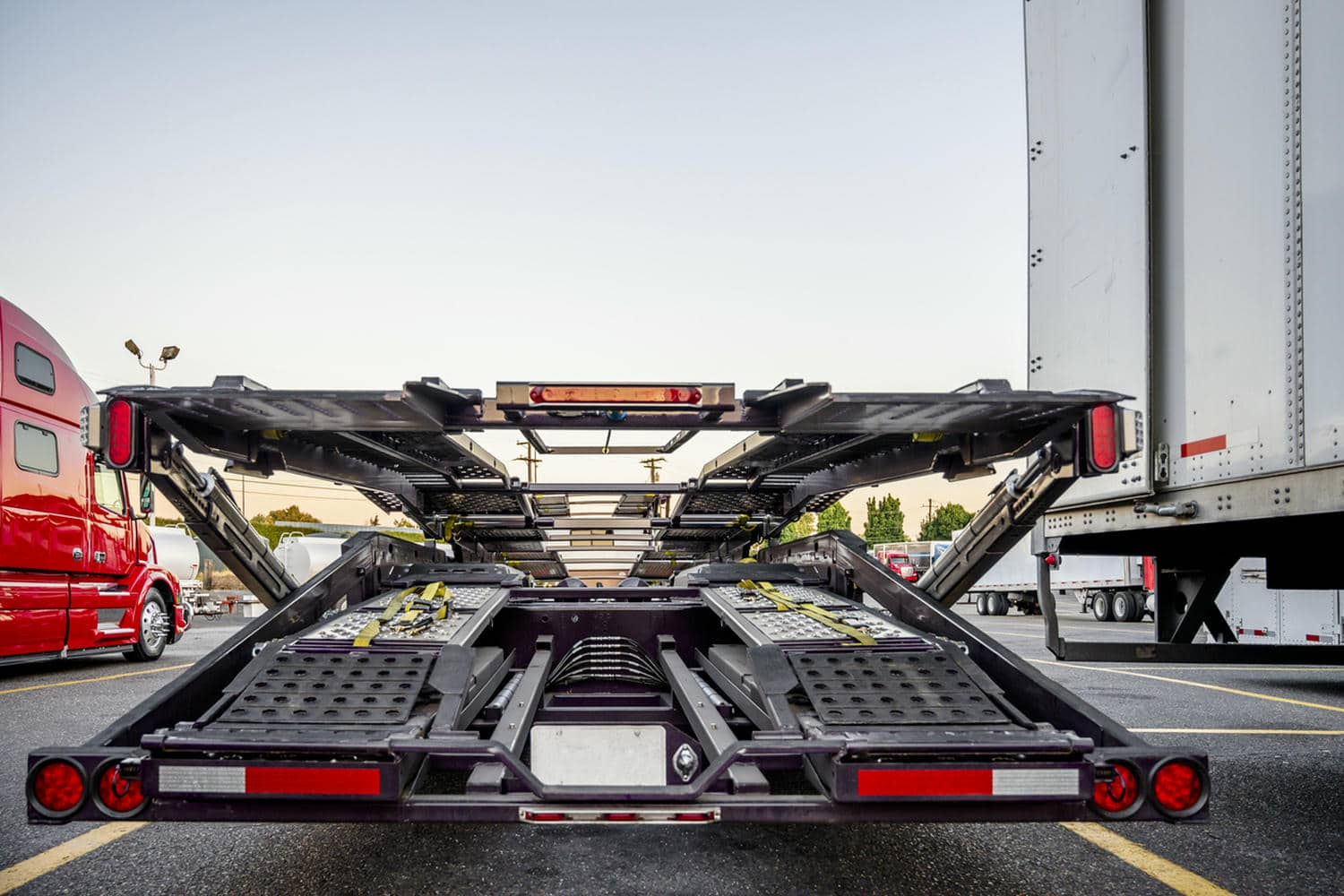
The constraints are physical and legal rather than a matter of effort. A loaded car carrier runs around 75 feet long and needs room to stop, unload and turn around without blocking traffic. Low branches and utility lines matter. So do weight restricted residential streets, permit parking, narrow one way roads, and gated communities that prohibit commercial vehicles outright.
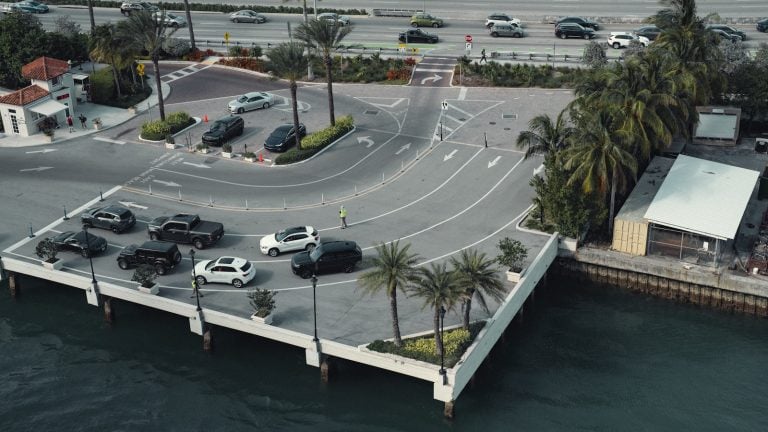
When any of those apply, the driver proposes a meeting point nearby, usually a large retail lot off a main road. That is standard practice, it typically adds ten minutes, and it is not a reduction in service. Drivers who run your area already know where they meet people.
The Places It Usually Cannot Be Your Door
- Gated and age restricted communities. Access rules are set by the community, and many ban commercial trucks regardless of what your carrier would prefer.
- Condo and apartment complexes. Height restricted garages and entrances built for cars, not for a rig with a two level trailer.
- Dense older city neighborhoods. Narrow streets, resident permit parking and nowhere legal to stop for twenty minutes.
- Steep or unpaved approaches. Hillside streets, canyon roads and long dirt driveways are genuinely unsafe for a loaded trailer.
- Anywhere with a low bridge or viaduct on the approach. Drivers route around them and will not chance it.
Say which of these describes you when you book. It costs nothing and it turns a potential problem into a two minute conversation.
How the Handover Works
The process is the same whether it happens at your driveway or a parking lot.
The driver contacts you ahead of arrival, usually the day before with an approximate time. You walk the vehicle together and complete the condition report, noting existing damage, marks and the odometer reading. You both sign, you keep a copy, and the car is loaded.
At delivery the same thing happens in reverse, and this is the half that matters most. Inspect the car before you sign, not after. Compare it against the pickup report and your own photographs, check the roof and lower panels where damage hides, and start the engine. If something is wrong, write it on the bill of lading while the driver is present, because a clean signed report is a formal statement that the vehicle arrived undamaged.

Door to Door Versus Terminal
Terminal service means dropping the car at a storage yard and collecting it from another at the far end. It still exists, and it is occasionally the right answer, but it is no longer the default for good reasons.
The saving is usually small, and it can disappear entirely once you count driving to the terminal, arranging a ride back, doing the same at the other end, and any storage charged after a grace period. You also lose the walkthrough with the driver, since the condition report is completed by yard staff rather than with you present.
Terminal makes sense when a yard happens to be genuinely convenient for you, or when your dates are so loose that leaving the car somewhere is easier than being available. Otherwise door to door is both simpler and usually cheaper in total. Our full comparison covers the trade offs.
You Do Not Have to Be There Yourself
Someone does, at both ends, but it does not have to be you. A spouse, friend, relative, neighbor, property manager or colleague can act, provided the carrier is told in advance who it will be and has their phone number.
Give whoever receives the car your pickup photographs so they have something to compare against, and make sure they understand what signing the report means. This comes up constantly on relocations, where people fly ahead of their vehicle, and it is entirely routine.
Preparing for Pickup Day
Standard preparation applies and the pre-pickup checklist covers it. Wash the car so existing marks are visible, photograph every panel in daylight including the roof, empty it completely, and leave about a quarter tank of fuel.
Two additions specific to a door pickup. Make sure the car is accessible rather than boxed in behind other vehicles, because the driver is working to a schedule. And be reachable by phone that morning, since the single most common cause of a missed pickup is a customer who cannot be contacted when the driver is fifteen minutes away.
What Door to Door Costs, and Whether It Is Worth It
Door to door is the standard way vehicles move now, so most quotes you receive already are door to door prices. Where a terminal option exists, the saving is usually small, and it buys you two extra trips, storage exposure at each end, and additional handling of the vehicle.
What actually moves the number is the same set of factors as any transport: distance and route, vehicle size and whether it runs, season, how flexible your dates are, and how far each end sits from a main corridor. The door to door part itself is rarely the expensive component.
The honest case for it is time and handling rather than luxury: one handover at each end, no terminal queue, no storage fees if you are late collecting, and the condition report completed with you present. For most people that is worth more than the difference.
Common Questions
Will the truck really come to my house? If your street can take a 75 foot carrier, yes. If it cannot, the driver arranges a meeting point nearby, which is normal.
Does door to door cost more than terminal? Usually about the same or less once you count the driving and storage that terminal service adds.
What if I live in a gated community? Expect a handover just outside the gate. Name the community when you book.
Can someone else hand over or receive the car? Yes, with advance notice of who it will be. They sign the condition report on your behalf.
How much notice does the driver give? Usually a call the day before with an approximate window, then a shorter warning on the day.
Get a Quote
Call Ship A Car, Inc. at (866) 821-4555 with both addresses and anything unusual about the approach at either end, or price the move with the instant calculator.